#Event Introduction
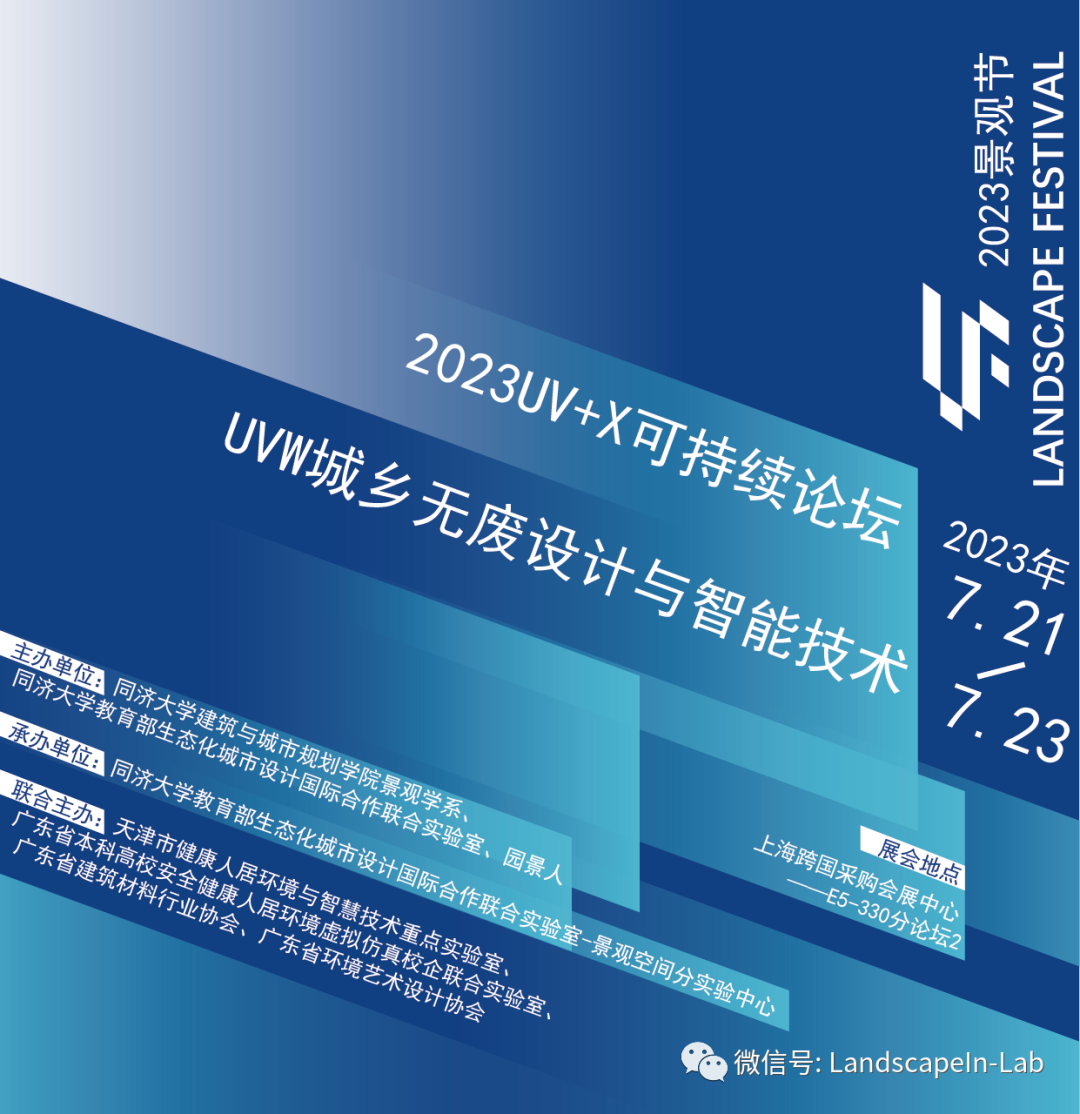
The Department of Landscape at the School of Architecture and Urban Planning of Tongji University joined hands with the "2023 Landscape Festival and the 2nd Landscape New Scenes and New Materials Exhibition" and the "UVW Sustainable Forum" to hold this UVW Urban and Rural Waste-Free Design and Intelligent Technology Forum. The goal of this forum is to promote awareness of sustainable development and environmental protection, and explore best practices and innovative solutions for waste management. Through this forum, we hope to build a communication platform in the field of environmental protection and bring together experts, practitioners and relevant people from all walks of life to jointly discuss the feasibility of solving waste problems and the path of sustainable development.
Zero waste is not about not producing garbage at all, but a process of constantly bringing the amount of garbage to zero through various efforts. Waste-free development is a new model for international economic development and urban and rural construction in recent years. As the main way to achieve the "double carbon" goal in the field of urban and rural construction, the waste-free concept has put forward new requirements and directions for sustainable urban and rural development. Waste-free design strategies in the field of landscape architecture include four aspects: scheme design, design technology, material application, and organization methods.
The forum is divided into two main parts, namely the waste-free academic salon and the waste-free design workshop. The forum is mainly composed of relevant professionals and students, and discusses waste-free topics from different perspectives.# agenda of the meeting
Wufei Academic SalonTime: July 21, 2021 (Friday) afternoon
Venue: Shanghai Multinational Procurement Convention and Exhibition Center--E5-330 Sub-Forum 2
Agenda:
13:30 – 14:00 |Opening Ceremony-Leadership Speech
14:00 – 16:00 |Cross-disciplinary keynote speeches
16:00 – 16:30 |round table
16:30 – 16:45 |concluding remarks
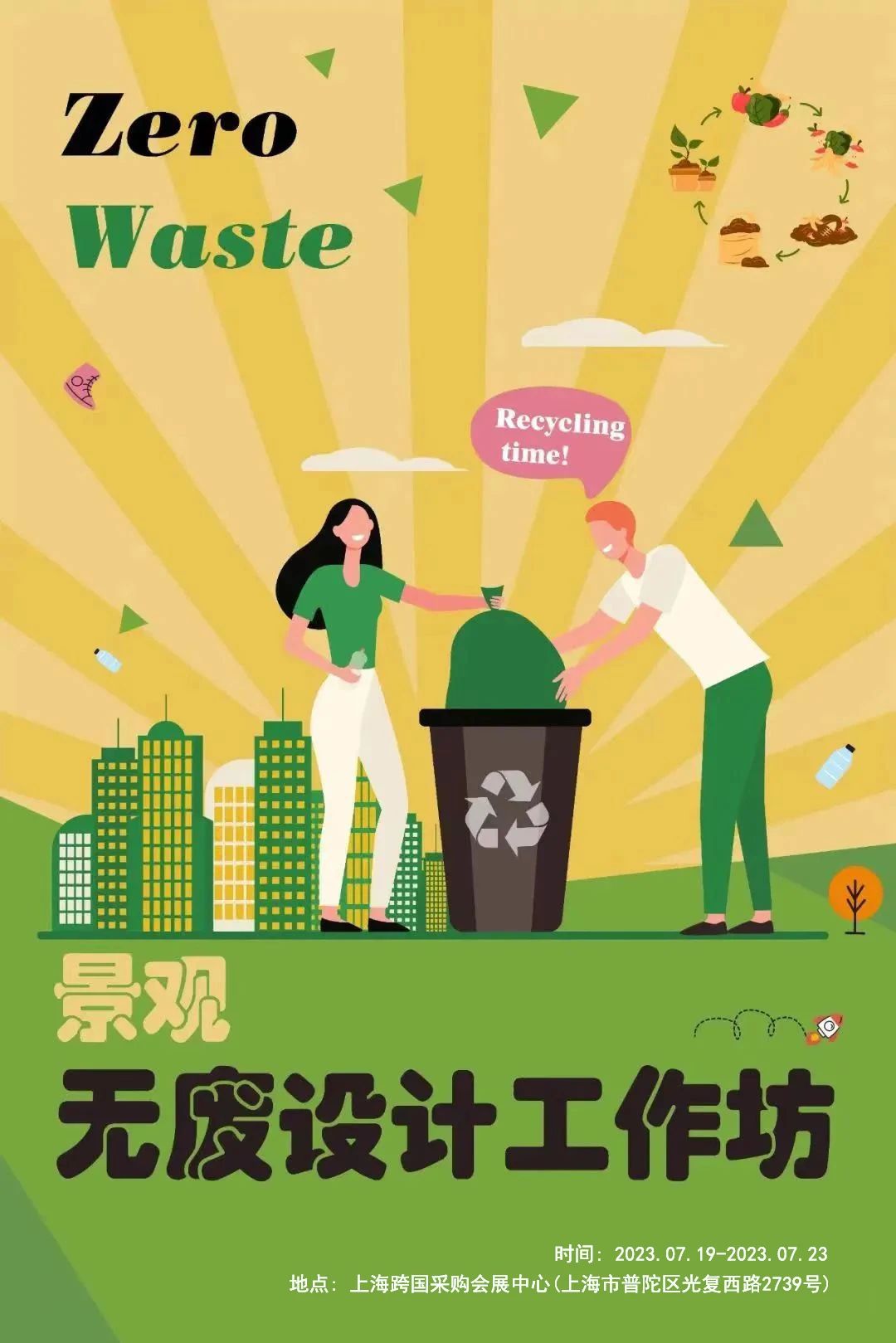
Waste-free design workshopTime: July 19, 2021-July 23, 2023
Venue: Shanghai Multinational Procurement Convention and Exhibition Center--B2-78
Agenda:
The theme of the event was released on July 1
July 1-July 10 Plan conception and submission
On July 13, the evaluation results notice and offline manufacturing invitation were released
Invitation confirmation on July 15
July 19-July 20 Live production
July 21-July 23 Exhibition of Works
On the morning of July 23, the closing ceremony of the forum-work report and award presentation# Forum 1: Waste Free Academic SalonThe waste-free academic salon section of the forum is a platform for cross-field exchanges for scholars, researchers, designers, and artists in the fields of environmental protection and sustainable development. It brings together pioneers from different fields who are in environmental science and sustainable development. He has rich knowledge and experience in related fields such as development, circular economy, ecology, design aesthetics, and artistic creation. The goal of this section is to promote cooperation and interaction between academia and industry, academia and academia, and share the latest research results, innovative concepts and practical experience.
In the waste-free academic salon section, experts and scholars from the industry will be invited to share and discuss, conduct special reports, roundtable forums, etc., exchange the latest academic results, discuss research projects in different fields, and provide opportunities to communicate with professionals. This platform encourages innovative thinking and interdisciplinary cooperation, and is committed to promoting academic research and practice in environmental protection and sustainable development.# Forum 2: Waste Free Design WorkshopThe waste-free landscape design workshop aims to promote students 'interest and understanding of related fields, strengthen communication and contact between students and professionals, and discuss waste-free concepts from a new perspective. The workshop will invite professionals to participate in depth from multiple stages such as early concepts, offline construction, and reporting and selection to comprehensively deepen students 'understanding of the concept of non-waste.## Recruitment requirements and registration instructionsThe activity is open to recruiting relevant professionals across the country who are interested in participating in sustainable material utilization, recycling, and waste-free design practices, including but not limited to gardens, landscape architecture, landscape, environmental art, materials science, architecture, urban and rural planning, public art, Undergraduates, graduate students, working workers and interested residents in different fields such as sociology and psychology.
Participate in the competition through a combination of online and offline. There is no limit to the number of online teams recruited (no team members are allowed to arrive at the site to complete the construction). Each group has 3-5 people. After submitting the plan, some teams are selected and invited to conduct offline production (all teams can arrive at the site/at least one classmate can go offline to complete the on-site construction). If the team has relatively mature raw materials, it will give priority to offline construction.
Please ensure that the offline team arrives at the site from July 19 to July 20 to complete the production process, and please ensure that at least one classmate in the group is present to participate in the waste-free forum and workshop on July 21 and July 23. Report and award awards.
A waste-free forum will be held during the workshop, and professional famous teachers will be invited to explain waste-free theory, waste-free materials, waste-free design methods and artificial intelligence technology. Mentors will also be arranged to provide on-site guidance during the production stage.
PS: Since the venue and materials need to be prepared in advance, if the itinerary changes and you cannot participate in the event, please transfer the event quota yourself in advance.## Design methods and material preparationYou can refer to waste-free design methods in various fields, use recycled materials or recycled materials to re-create art decorations, upgrade "waste" into emotional and valuable items, and extend their use time. The themes and names of the works are self-designed, such as "Rebirth of Concrete","Waste Bottles and New Clothes","Reconstructed Bags", etc. The scale of the works is about 1m ³-4m³ (can be adjusted appropriately).
Raw materials: Design materials can prepare recycled materials such as recycled concrete, recycled bricks, recycled glass, etc., or collect usable waste around you, such as domestic waste: waste cartons, paper clips, plastic bottles, used clothes, bottle caps, ropes, furniture, tires, vases, magazines, newspapers, tickets, etc., construction waste such as waste concrete, waste bricks, industrial waste such as waste wires, tiles, screws and other industrial waste.## Submission of results
selection stageThe team leader joins the team leader group and sends the preliminary plan idea (200 words plan idea + plan display drawing + existing materials and material requirements (ppt/pdf/word can be used) to the email address: lmq15952027018@163.com before 24:00 on July 10.
The organizer selects the best team for offline construction. The selection results and offline production invitations will be notified before 24:00 on July 13.Offline construction and achievement submission stageStudents need to package and send the following 2 results to email lmq15952027018@163.com or WeChat lmq15952027018 before 22:00 on July 20:
- Final report PowerPoint (≤10 pages): including design theme, name, design ideas, design process display, raw material source, waste-free design strategy, etc.
- Process video: Full process recording video clip, 3- 5 min. (Such as workshop material preparation and production process)## immediately signed up
线上提交成果后,评选出10组优秀作品,颁发获奖证书,邀请部分组至线下参与workshop搭建。
线下搭建团队择优选拔前三名优胜奖,颁发优胜证书与参与证书,并发放奖品。