image
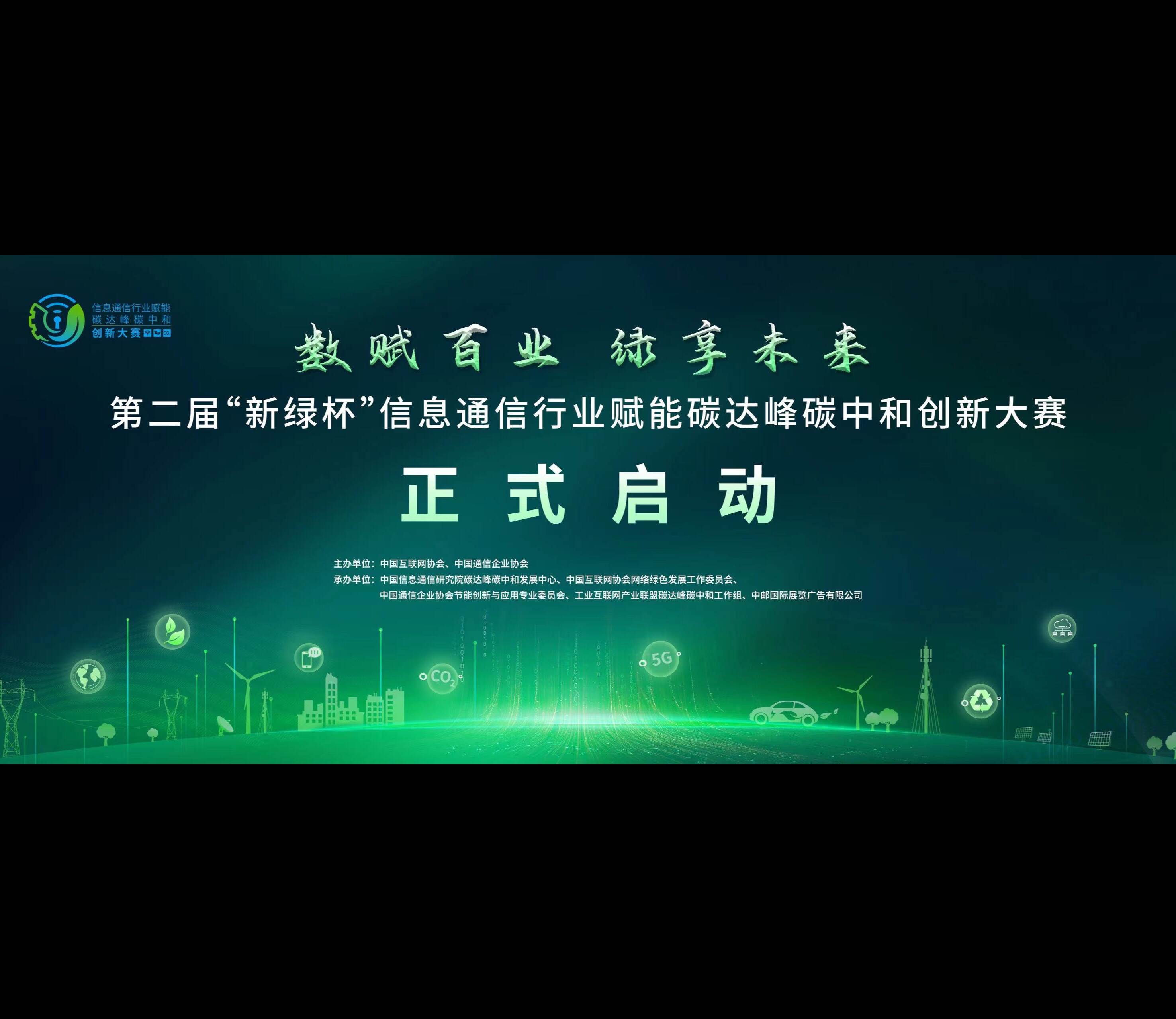
The 2nd "New Green Cup" Information and Communication Industry Empowering Carbon Peak and Carbon Neutralization Innovation Competition
The theme of the competition is "Empowering all industries with numbers, enjoying the future with green". It aims to select the industry's green and low-carbon technological innovation achievements and application cases, explore the latest application scenarios of digital empowerment, energy conservation and carbon reduction, promote excellent practical experience and advanced development models, and adopt "Setting benchmarks, strengthening demonstrations, and promoting innovation" to comprehensively enhance the industry's technical level and product supply to empower the whole society to save energy and carbon reduction. (1) Event setting The competition focuses on a total of ten events in two directions: empowering the information and communication industry to save energy and reduce carbon in vertical fields and its own energy and carbon reduction. The information and communication industry empowers vertical areas of energy conservation and carbon reduction including five competitions: Event 1: Empowering green and low-carbon development of industries. Aiming at technological innovation, model innovation and application practice that digital technology empowers the green and low-carbon transformation of the industrial industry, focusing on the digital and green coordinated development of the industrial industry, reflecting the digital and green transformation scenarios of equipment, processes, management and other aspects, including but not limited to: Energy, mining, steel, nonferrous metals, petrochemical chemicals, building materials, machinery, automobiles, home appliances, electronic information, food and other industrial fields. Event 2: Empowering the green and low-carbon development of producer services. Facing various application scenarios where digital technology empowers the green and low-carbon transformation of producer services, digital technology will be leveraged to provide energy-saving and carbon-reduction transformation for all aspects of the producer services industry, including but not limited to: transportation, warehousing and logistics, information transmission, software and information technology services, finance, leasing and business services, scientific research and technical services, ecological environmental protection and environmental governance and other industrial fields. Event 3: Empowering the green and low-carbon development of the lifestyle service industry. Various application practices for digital technology to help residents achieve a green life, including but not limited to: applications to improve residents 'travel efficiency; applications to assist in green packaging design and low-carbon zero-carbon distribution; promoting online office, online medical care, information Consumption and other applications; relying on platforms, apps and other innovative designs for green consumption promotion, green point redemption and other applications; providing discounts, rewards, transactions and other service applications for recycling of used domestic goods. Competition 4: Empowering green and low-carbon development of park cities. The application practice of digital technology to empower cities and parks in green and low-carbon development, including green applications of cities and parks in operation management, governance services, etc.; providing technical solutions such as carbon footprint sensing and carbon asset verification to help carbon emission reduction monitoring and services; application of digital technologies such as digital twins and artificial intelligence in areas such as energy conservation and consumption reduction in cities and parks; providing zero-carbon park construction plans, etc. Event 5: Empowering green and low-carbon development in agriculture and rural areas. Innovative applications for digital technology to empower green and low-carbon development in agriculture and rural areas include but are not limited to: rural digital infrastructure, integration and sharing of agriculture-related resources, food security and smart agriculture, new rural industries and new business formats, rural digital culture, rural governance digitalization and other agricultural and rural fields, using digital technology to innovate applications in agricultural and rural areas such as energy conservation and consumption reduction, pollution reduction and carbon reduction, resource recycling, and ecological and environmental protection. The information and communication industry's own energy conservation and carbon reduction direction includes five events: Event 6: Green data center. For green and low-carbon products and solutions, advanced technology applications, and model innovation in the data center field, including but not limited to green and low-carbon technology achievements in data centers, innovative technology application cases, green and low-carbon products for data centers, green design/energy-saving transformation solutions, green energy utilization, integration of source, network, load and storage, comprehensive energy management, etc., involving energy conservation in computer rooms, modular data centers, refrigeration and power supply system energy conservation, energy storage, water-saving technologies, energy recycling, IT energy conservation (such as intelligent scheduling of computing power, green software, low-power server/storage/network equipment, adaptive adjustment of IT load to support power grid stability, etc.), energy consumption and carbon emission monitoring, intelligent construction, and operation and maintenance. Event 7: Green base station and communication room. Innovative solutions and advanced technology applications for computer rooms and base stations undertaking network communication services in green and low-carbon development. Including but not limited to solutions for enterprises to increase the proportion of green power by adopting self-pulling dedicated lines, cooperating to establish clean energy power stations, and self-building small photovoltaic systems; using hardware/software energy-saving technology to improve the overall energy efficiency solutions of main equipment; using intelligence Power supply, differentiated power backup, peak cutting and valley filling, new power supply systems, power demand response, etc. to achieve applications such as improving quality, efficiency and reducing costs; applying natural cold source, precise regulation, and isolation of hot and cold channels to improve temperature control capabilities; Advanced solutions such as energy consumption, energy efficiency, carbon emissions and resource utilization platform-based monitoring and management, and intelligent control. Event 8: Co-construction and sharing. Participating projects must contain co-construction and sharing elements, facing communication infrastructure co-construction and sharing cases and advanced application models. Including but not limited to innovative practices of co-construction and sharing among industry enterprises in pipelines, poles, optical cables, computer rooms, room divisions, etc.; two-way open and shared application of resources such as pipe holes, towers, and station sites between the information and communication industry and municipal, transportation, public security, and electric power fields; large-scale deployment of outdoor integrated cabinets, smart light poles and other resource-sharing carriers. Event 9: Green supply chain. Solutions for industrial chain supply chain collaborative manufacturing and green procurement demonstrations. Including but not limited to strengthening the research and development of energy-saving and emission reduction technologies, upstream and downstream enterprises collaborate to carry out application practices in the design, production and use of green products; comprehensively considering factors such as energy efficiency of equipment and facilities, green manufacturing processes and service life, and developing green procurement systems, processes, Innovations in management mechanisms such as standards, testing and verification: Promote application practices in the procurement of green and low-carbon products and services. Event 10: Utilization of new green technologies and new products. The participating projects include using new green materials, new products, and new technologies to improve the energy efficiency ratio of information and communication system equipment and realize green solutions and application cases throughout the life cycle of communication equipment. Including but not limited to the use of new green materials and new technologies to improve the energy efficiency ratio of wireless networks, transmission networks, core networks, IP networks and other communication main equipment; the use of new green materials such as transferable to promote energy conservation and cost reduction in transportation packaging; the adoption of new products Accelerate green upgrades such as trade-in of high-energy-consuming communication main equipment, and adopt new green technologies to promote related green solutions such as resource recycling, recycling and disposal of used equipment and materials; Use carbon finance to accelerate green development, and other solutions to promote green development through adopting new green technologies and new products. (2) Competition registration Participating units will register for the competition through the competition official website and register
(GMT+8:00) Beijing, Chongqing, Hong Kong SAR, Urumqi
Program type
Competition
Organizer
Program details

The theme of the competition is "Empowering all industries with numbers, enjoying the future with green". It aims to select the industry's green and low-carbon technological innovation achievements and application cases, explore the latest application scenarios of digital empowerment, energy conservation and carbon reduction, promote excellent practical experience and advanced development models, and adopt "Setting benchmarks, strengthening demonstrations, and promoting innovation" to comprehensively enhance the industry's technical level and product supply to empower the whole society to save energy and carbon reduction.

(1) Event setting

The competition focuses on a total of ten events in two directions: empowering the information and communication industry to save energy and reduce carbon in vertical fields and its own energy and carbon reduction.

The information and communication industry empowers vertical areas of energy conservation and carbon reduction including five competitions:

Event 1: Empowering green and low-carbon development of industries. Aiming at technological innovation, model innovation and application practice that digital technology empowers the green and low-carbon transformation of the industrial industry, focusing on the digital and green coordinated development of the industrial industry, reflecting the digital and green transformation scenarios of equipment, processes, management and other aspects, including but not limited to: Energy, mining, steel, nonferrous metals, petrochemical chemicals, building materials, machinery, automobiles, home appliances, electronic information, food and other industrial fields.

Event 2: Empowering the green and low-carbon development of producer services. Facing various application scenarios where digital technology empowers the green and low-carbon transformation of producer services, digital technology will be leveraged to provide energy-saving and carbon-reduction transformation for all aspects of the producer services industry, including but not limited to: transportation, warehousing and logistics, information transmission, software and information technology services, finance, leasing and business services, scientific research and technical services, ecological environmental protection and environmental governance and other industrial fields.

Event 3: Empowering the green and low-carbon development of the lifestyle service industry. Various application practices for digital technology to help residents achieve a green life, including but not limited to: applications to improve residents 'travel efficiency; applications to assist in green packaging design and low-carbon zero-carbon distribution; promoting online office, online medical care, information Consumption and other applications; relying on platforms, apps and other innovative designs for green consumption promotion, green point redemption and other applications; providing discounts, rewards, transactions and other service applications for recycling of used domestic goods.

Competition 4: Empowering green and low-carbon development of park cities. The application practice of digital technology to empower cities and parks in green and low-carbon development, including green applications of cities and parks in operation management, governance services, etc.; providing technical solutions such as carbon footprint sensing and carbon asset verification to help carbon emission reduction monitoring and services; application of digital technologies such as digital twins and artificial intelligence in areas such as energy conservation and consumption reduction in cities and parks; providing zero-carbon park construction plans, etc.

Event 5: Empowering green and low-carbon development in agriculture and rural areas. Innovative applications for digital technology to empower green and low-carbon development in agriculture and rural areas include but are not limited to: rural digital infrastructure, integration and sharing of agriculture-related resources, food security and smart agriculture, new rural industries and new business formats, rural digital culture, rural governance digitalization and other agricultural and rural fields, using digital technology to innovate applications in agricultural and rural areas such as energy conservation and consumption reduction, pollution reduction and carbon reduction, resource recycling, and ecological and environmental protection.

The information and communication industry's own energy conservation and carbon reduction direction includes five events:

Event 6: Green data center. For green and low-carbon products and solutions, advanced technology applications, and model innovation in the data center field, including but not limited to green and low-carbon technology achievements in data centers, innovative technology application cases, green and low-carbon products for data centers, green design/energy-saving transformation solutions, green energy utilization, integration of source, network, load and storage, comprehensive energy management, etc., involving energy conservation in computer rooms, modular data centers, refrigeration and power supply system energy conservation, energy storage, water-saving technologies, energy recycling, IT energy conservation (such as intelligent scheduling of computing power, green software, low-power server/storage/network equipment, adaptive adjustment of IT load to support power grid stability, etc.), energy consumption and carbon emission monitoring, intelligent construction, and operation and maintenance.

Event 7: Green base station and communication room. Innovative solutions and advanced technology applications for computer rooms and base stations undertaking network communication services in green and low-carbon development. Including but not limited to solutions for enterprises to increase the proportion of green power by adopting self-pulling dedicated lines, cooperating to establish clean energy power stations, and self-building small photovoltaic systems; using hardware/software energy-saving technology to improve the overall energy efficiency solutions of main equipment; using intelligence Power supply, differentiated power backup, peak cutting and valley filling, new power supply systems, power demand response, etc. to achieve applications such as improving quality, efficiency and reducing costs; applying natural cold source, precise regulation, and isolation of hot and cold channels to improve temperature control capabilities; Advanced solutions such as energy consumption, energy efficiency, carbon emissions and resource utilization platform-based monitoring and management, and intelligent control.

Event 8: Co-construction and sharing. Participating projects must contain co-construction and sharing elements, facing communication infrastructure co-construction and sharing cases and advanced application models. Including but not limited to innovative practices of co-construction and sharing among industry enterprises in pipelines, poles, optical cables, computer rooms, room divisions, etc.; two-way open and shared application of resources such as pipe holes, towers, and station sites between the information and communication industry and municipal, transportation, public security, and electric power fields; large-scale deployment of outdoor integrated cabinets, smart light poles and other resource-sharing carriers.

Event 9: Green supply chain. Solutions for industrial chain supply chain collaborative manufacturing and green procurement demonstrations. Including but not limited to strengthening the research and development of energy-saving and emission reduction technologies, upstream and downstream enterprises collaborate to carry out application practices in the design, production and use of green products; comprehensively considering factors such as energy efficiency of equipment and facilities, green manufacturing processes and service life, and developing green procurement systems, processes, Innovations in management mechanisms such as standards, testing and verification: Promote application practices in the procurement of green and low-carbon products and services.

Event 10: Utilization of new green technologies and new products. The participating projects include using new green materials, new products, and new technologies to improve the energy efficiency ratio of information and communication system equipment and realize green solutions and application cases throughout the life cycle of communication equipment. Including but not limited to the use of new green materials and new technologies to improve the energy efficiency ratio of wireless networks, transmission networks, core networks, IP networks and other communication main equipment; the use of new green materials such as transferable to promote energy conservation and cost reduction in transportation packaging; the adoption of new products Accelerate green upgrades such as trade-in of high-energy-consuming communication main equipment, and adopt new green technologies to promote related green solutions such as resource recycling, recycling and disposal of used equipment and materials; Use carbon finance to accelerate green development, and other solutions to promote green development through adopting new green technologies and new products.

(2) Competition registration

Participating units will register for the competition through the competition official website and register

Publisher
TanLIVE
Organizer
Internet Society of China
Organizer
China Communications Enterprises Association
Report